
'$125 million for the hull and the remaining of over $350 million for liability.'

As fintech major Pine Labs gears up for its initial public offering (IPO), its Draft Red Herring Prospectus has highlighted its top executives' pay and stock options, including those of Chief Executive Officer (CEO) Amrish Rau. Rau's net worth is estimated at Rs 850 crore-1,000 crore following the IPO.
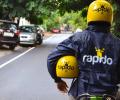
Bike-taxi drivers are also left stranded as many depended on the service.

The claims will include three kinds of liabilities: Damage to the aircraft; loss of lives who were aboard the aircraft; including the crew members; and third-party liability because of loss of lives where the aircraft crashed; and cargo liability.

'The retail industry is still growing in double digits.'

'The brand, the team, and the people have to make the transition from playing league matches to Test matches.'

The change in stance to neutral from accommodative in the June monetary policy meeting does not necessarily signal that the Reserve Bank of India's (RBI's) rate setting body - monetary policy committee (MPC) - will go on a prolonged pause on rate cuts going forward, believe experts.
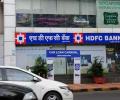
HDFC Bank on Sunday said that it will "pursue all lawful remedies" to recover public funds and address the retaliatory actions taken by the Mehta family of the Lilavati Kirtilal Mehta Medical (LKMM) Trust, which has filed a complaint against the bank's managing director (MD) & chief executive officer (CEO) Sashidhar Jagdishan alleging financial fraud.

Foreign investment in bonds issued by Indian corporates touched a 10-year high in May at 20,996 crore, driven by $3.35 billion fundraise by the Shapoorji Pallonji (SP) group, which saw infusion from Deutsche Bank, BlackRock, Morgan Stanley, Davidson Kempner, and Cerberus Capital, among others. The SP group sold three-year bonds, offering 19.75 per cent yield compounded annually and payable at maturity.
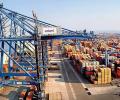
State-owned Life Insurance Corporation (LIC) on Thursday entirely subscribed to the Rs 5,000 crore bond issue of Adani Ports and Special Economic Zone (APSEZ) at a coupon rate of 7.75 per cent, said sources privy to the development.

'Now we have one of the best asset qualities in the industry.'

One97 Communications Ltd (OCL), the company that operates the Paytm brand, posted a consolidated loss of Rs 539.8 crore in the fourth quarter of 2024-25 (Q4FY25), slightly lower from the Rs 549.6 crore it reported in Q4FY24. Sequentially, the fintech company's loss widened from Rs 208.3 crore in Q3FY25 on account of a one-time exceptional expense amounting to Rs 522 crore during the quarter ended March 2025.

The Reserve Bank of India (RBI) has approved IndusInd Bank's request to form an executive committee to discharge the duties and responsibilities of the chief executive officer (CEO) for a period of maximum three months or till a new CEO takes charge, whichever is earlier.
'Entering India is exciting, but it's also challenging. You have to be prepared for long-term investment.'

Anmol Singh Jaggi and Puneet Singh Jaggi, once hailed as rising stars in India's clean energy sector, are now facing serious regulatory action.

An hour-long disruption could affect around 40 million UPI transactions.
LIC said USTR's views are based on an incomplete understanding of Indian insurance regulation and LIC's functioning.

The US Trade Representative noted that India's average applied tariff rate stood at 17% per cent, the highest of any major world economy.

These super-rich Indians intend to reside in their chosen host country permanently while retaining their Indian citizenship.

Reserve Bank of India (RBI) Governor Sanjay Malhotra on Wednesday said regulations should not create unintended barriers to financial inclusion while emphasising that the impact of regulations on individuals and businesses should be considered.
 © 2026 Rediff.com - Advertise with us - Disclaimer - Privacy Policy - Sitemap - Feedback - About us - Terms of use - Grievances